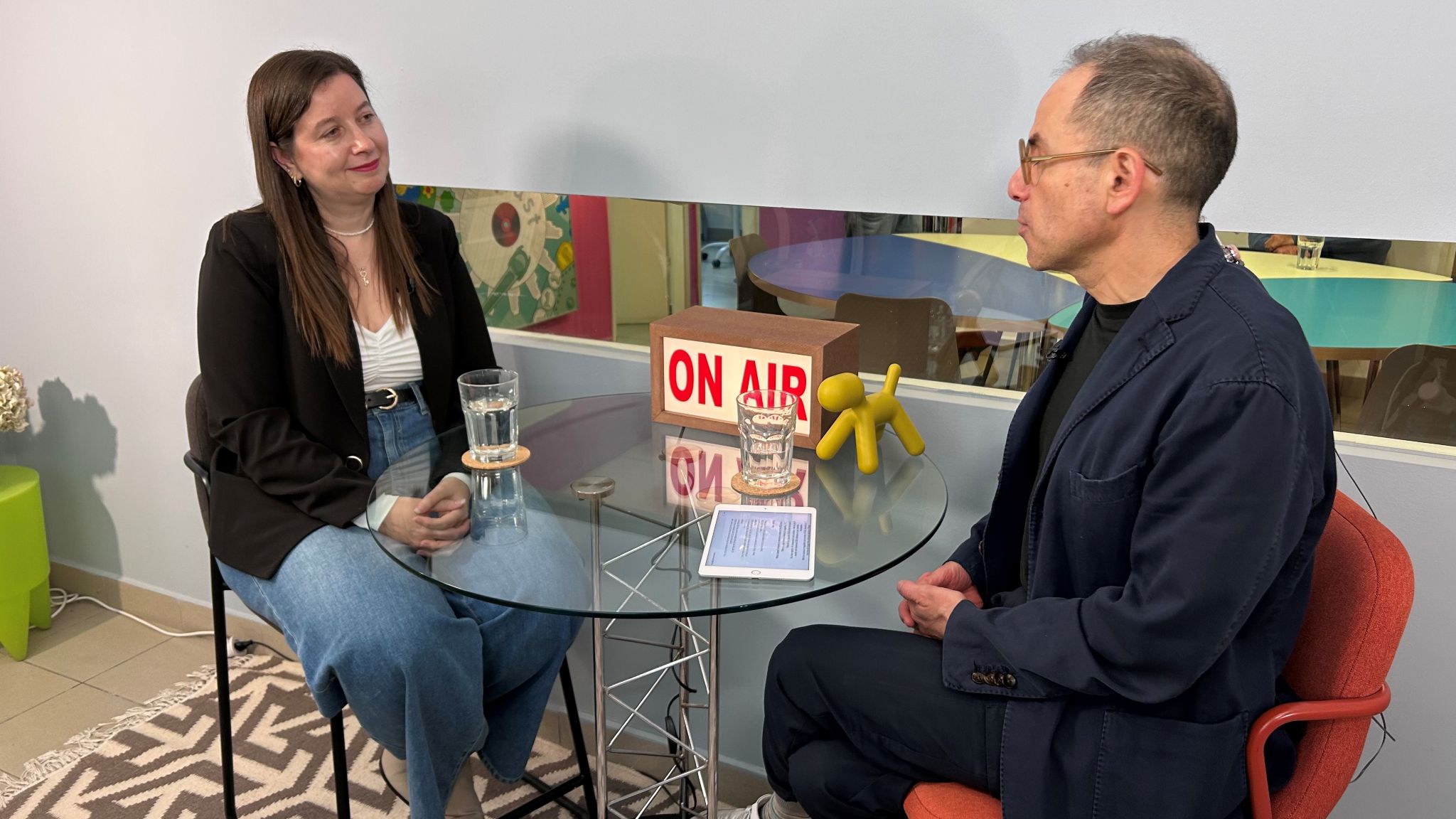
A conversation with Liat Menashe, Head of Service at Strauss Water, on a cross-sector initiative supporting bereaved families through complex bureaucratic moments.
To watch the full interview with Liat Menashe click here<<
In this interview, Liat Menashe, Head of Service at Strauss Water, shares how a unique cross-sector initiative was created to support families bereaved during the Iron Swords war by helping them navigate complex and painful bureaucratic processes. Born out of a heartfelt appeal from a bereaved mother, the initiative brings together senior service professionals from across the business sector to assist families with essential administrative matters, at a time when their emotional capacity is at its lowest.
Through a network of trained volunteer “Service Officers,” with a coordination center at Strauss Water, and close cooperation with public and private institutions, the initiative offers long-term, personalized support to hundreds of families. The conversation highlights how professional expertise, empathy, and collaboration between organizations can ease emotional burden and transform technical service into meaningful human support.
To watch the full interview with Liat Menashe click here<<
Full interview
Hi Liat thank you for joining us. This is a terrible situation, and out of that need, an initiative was created to support bereaved families. What does this initiative actually do?
The initiative supports families who lost loved ones in the Iron Swords war by helping them navigate bureaucracy. After a loss, families are suddenly required to deal with a wide range of administrative matters, things that are difficult under any circumstances, but especially for bereaved families.
A parent who lost a child, or a widow who lost her husband, suddenly has to contact banks, internet and cable companies, in some cases it’s the university, sometimes even figuring in what gym the membership needs to be canceled. It’s a long list of bureaucratic tasks. The mental burden of even approaching these issues is enormous.
On the surface, these are technical tasks. But behind them lies deep emotional pain.
Exactly.
How did this initiative come about?
It actually began well before October 7. For many years, we’ve had a “service guru,” Huli Raz, who manages a Facebook group which serves as a kind ofService Managers’ Network. The group includes nearly 2,000 senior service leaders, VPs and executives from service providers across Israel. It’s a real professional community where people learn from one another and help one another.
In December 2023, Sharon Eshel, the mother of Roni Eshel, a young soldier who served as a field observer at the Nahal Oz army base, posted in the group. Her post shattered our hearts and fundamentally shifted our perspective.
She wrote about losing her daughter on October 7, about weeks of uncertainty before learning she would not return, and about the painful, endless journey of bereavement, choosing a gravestone, receiving a death certificate, collecting personal belongings. Then she described receiving a letter from the bank addressed to “the heirs of the deceased,” and collapsing to the floor in tears, unable to bear seeing her daughter described that way.
She ended her post by asking the community: “Help us, bereaved families, go through this journey in a gentler way. Help us cope with this unbearable process.”
It was devastating, and it moved all of us deeply.
And that was the moment something shifted.
Yes. It was December 2023. We were all shocked and grieving, and a real discussion began: how do we respond? What can we, as organizations, actually do to offer a different kind of support?
So how does the initiative work in practice?
Following that post, we realized there was a real vacuum. Huli had a clear vision, and she approached several people, including me, asking whether Strauss Water would be willing to serve as the central hub for this initiative. I said yes immediately.
Of course, I then received formal approval from our CEO. Everything was done properly and transparently. But it was clear that this aligned with our values, both personally and as a company. From there, the journey began.
By early January, just three months after the war began, the initiative was already up and running. It happened incredibly fast – weekend meetings, late nights – because we understood the urgency and the pain.
The model is based on volunteer “Service Officers.” These are people, anyone with sensitivity and commitment, who go through a screening and interview process. Today we have about 350 Service Officers. Each one is paired with a bereaved family that requests support. The officer meets with the family, understands their needs, and identifies which organizations they need help dealing with.
This can be a one-time request, or ongoing support over time. The Service Officer stays in continuous contact with the family and accompanies them throughout the process.
Every request is submitted through a digital form that reaches our service center at Strauss Water. Our Public Inquiries team receives these requests. Alongside their regular, demanding, everyday jobs, they coordinate responses with over 250 organizations across Israel, each with a designated senior contact who understands the sensitivity involved.
So you’ve essentially built a business-to-business support network that spares families from facing bureaucracy alone.
Exactly. Instead of a family calling a generic hotline or visiting an office, retelling their story to someone inexperienced and with limited authority, they are contacted by a senior, trained, empathetic professional who understands the situation and has the power to resolve it properly.
Today, the initiative supports over 700 families. We work in cooperation with the Ministry of Defense, Yad LaBanim, and other organizations that help connect families to the service. It’s a full, functioning mechanism: assignment, guidance, follow-up. A living system.
This is a powerful example of how the business sector has mobilized since the war, especially when expertise is applied to a very specific need. But this must take an emotional toll on the people involved. How do you support them internally?
That’s a very important question. There is significant emotional strain. The Service Officers receive guidance on how to approach bereaved families, how to listen, how to cope. It’s challenging for them as well.
At Strauss Water, we’re active in many community initiatives, such as donating water dispensers and supporting customers in difficult situations, so we already have teams trained to handle emotionally complex cases. These teams receive professional emotional support, tools for processing, and spaces to talk and decompress.
And unfortunately, the initiative is still ongoing.
Yes. Sadly, more families continue to join, and even families already receiving support may face new needs over time.
One example: a widow received a call from the bank during the shiva (the week of mourning after someone passes awya) regarding a financial guarantee her husband had handled. She had no idea what to do. At that exact moment, her Service Officer called her and introduced herself. The widow said, “You are my angel. He sent you to me.”
From there, she received help with the bank, her telecom provider, her studies, every time a new issue arose. In another case, siblings needed urgent passports to attend a bereavement delegation abroad, and we helped expedite the process with the Population and Immigration Authority.
We help wherever we can, whenever needed.
The power of the network you’ve built is remarkable.
It is indeed. What once required personal connections and favors is now an organized, effective network that can reach almost anywhere. We’ve even hosted two conferences for volunteers at Strauss, bringing together people from organizations across the country. These gatherings were deeply moving, providing tools, shared learning, and emotional connection.
There’s something powerful about being able to help where your expertise truly makes a difference.
Absolutely. And we’re already thinking ahead, drawing insights from this work to help organizations better understand how to engage with bereaved families more broadly. While this initiative was born out of the Iron Swords war, the need exists for many populations facing loss or crisis.
We hope for the day when there will no longer be a need for a wartime initiative, but until then, and beyond, we want to continue doing good in meaningful ways.